
Launching a contact center is an important stage for many companies striving to provide quality customer service. But during this process, difficulties may arise that will reduce work efficiency. We have described typical mistakes that hinder successful call center launch.
1. Lack of a Clear Goal
When it comes to launching a contact center, it’s important to remember that creating it without a clearly defined goal and objectives can be a mistake.
First of all, you need to ask yourself the question: “Why do I need a call center?”. The answer determines the target focus of your project. A call center is not a universal tool for increasing profits, and it may not be suitable for all companies and business areas.
Before creating a call center, you need to clearly define what specific tasks you will be able to solve with its help and what benefits it will bring to your company. Only after clearly defining the goal can you proceed to creating a call center, and, if used correctly, it will become a useful tool for achieving your business plans.
You can read about organizing a call center from scratch in our blog article.
2. Transferring Project Management to Another Specialist
For successful call center building and management, you need to have an internal expert who is well-versed in all the company’s business processes. Only such a person will be able to effectively interact with the call center and ensure its operation in accordance with the company’s goals.
Remember that replacing the person responsible for the project at the very beginning of launch can lead to serious delays and difficulties. A new specialist will need time to get oriented in the project and understand its specifics. Therefore, it’s better to prepare a competent employee in advance and ensure their continuous work. This is an investment that will pay off in the future and will contribute to the successful operation of your company.
3. Simultaneous Launch of Multiple Projects
Attempting to implement multiple projects at once, especially if you don’t have enough experience working with new software, can lead to misunderstandings and work stoppages.
This mistake can affect both outsourcing call centers and large corporations with multiple departments. To avoid possible troubles, it’s recommended to start with the simplest project, using minimal communication loads.
For example, a bank’s call center decided to implement a new call processing system – client dialer. Instead of immediately applying the system to all bank clients, the dialer was set up only for a group of agents calling debtors. This approach allowed the company to study the effectiveness of the new system and minimize potential risks.
Only after thorough testing can you move on to scaling the project and implementing it to a wider audience. This approach will ensure more successful implementation of the new tool.
4. Software That Cannot Be Scaled
The main thing here is that your call center software should be ready for expansion. It should easily adapt to an increase in the number of clients and agents, as well as handle more complex tasks. That’s why cloud systems, for example, Oki-Toki, are so valued: they can quickly create new workplaces and add necessary functions.
For example, you have a small online store, and on the eve of a holiday you expect a sharp increase in orders. You don’t need to worry that your software won’t handle the additional load. In the Oki-Toki cloud system, adding a new agent and activating new capabilities, such as dialer, voice robot or voice broadcasting, takes only a few minutes.
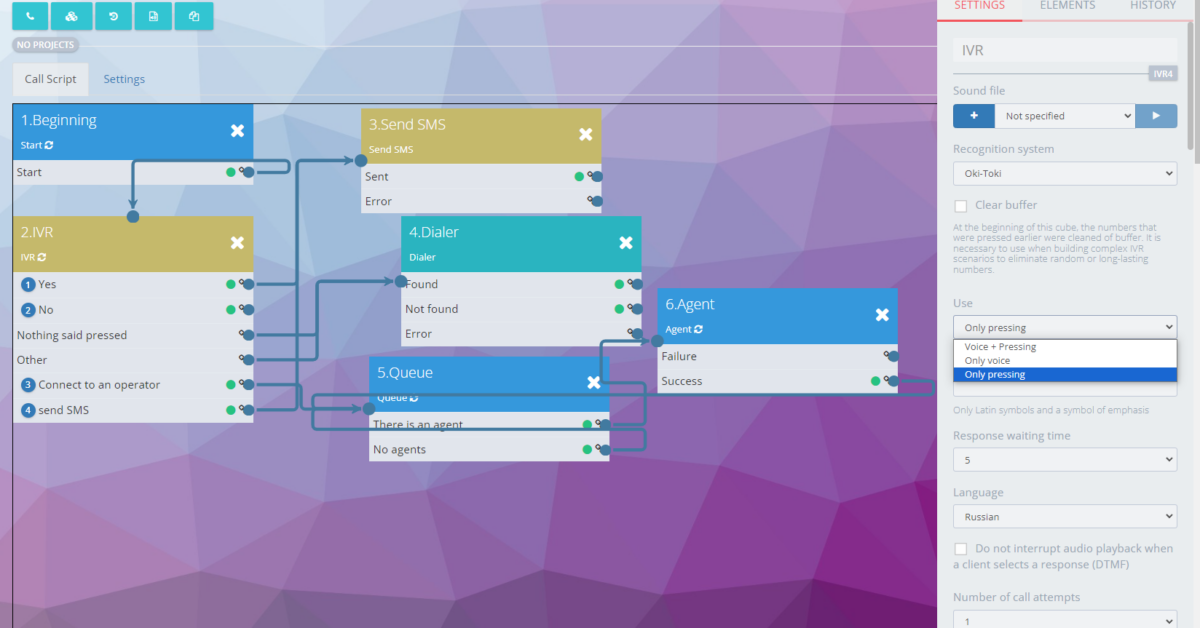
This approach helps save time and resources, and also allows you to properly configure the system for your tasks. In addition, Oki-Toki technical support is always ready to help with settings and call center automation.
5. Lack of Agents
At the call center launch stage, it’s necessary to understand how many agents are needed for the project. If there aren’t enough of them, clients may face long waiting times on the line. Of course, no one wants to lose clients due to lack of staff. To avoid such situations, there are several ways to determine how many agents you really need.
Let’s consider some of them:
- Independent forecast: calculate the number of agents based on average call duration and number of calls per hour.
- Erlang Calculator: determine the required number of agents, taking into account the service level.
- Load data – determine the number of agents to handle calls during peak loads, based on the number of calls.
You can read more about how to calculate the number of call center agents in a separate article.
For processing web chats and answering emails, allocate a separate group of agents and set their own KPIs (key performance indicators). This way you will ensure quality customer service and increase their loyalty. This is an important step towards your business success!
Don’t hesitate to contact our team of specialists if you need help with this matter. In addition, the Oki-Toki service has useful tools for evaluating and optimizing your call center.
6. Absence of KPI
For call center managers, key performance indicators (KPI) are critically important tools for successful work. However, if KPIs are not defined specifically, this can make it difficult to evaluate performance and achieve set goals.
For example, according to the standard “Analysis of word occurrence in transcript” Oki-Toki will search for calls that contain specified words and display parameters in the KPI Journal.
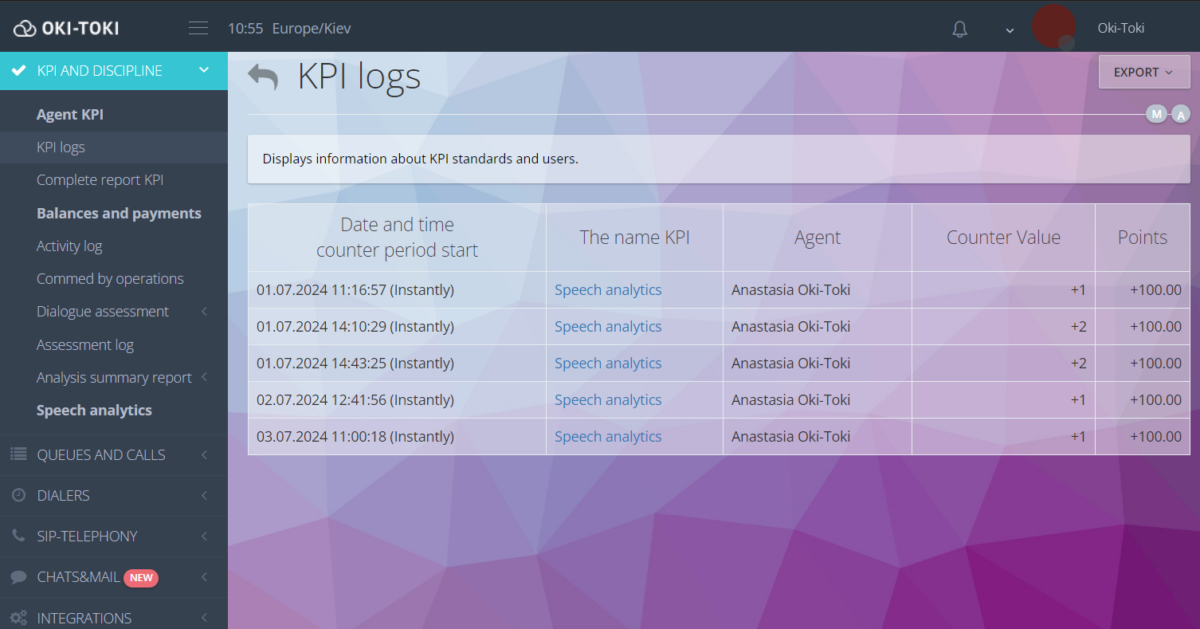
You can read more about Speech Analytics in a separate article.
The SL (service level) metric will help organize business processes. If SL is 90%, this indicates that managers are processing incoming calls within established deadlines.
Using KPI tools from Oki-Toki, you will be able to assess how successfully your call center is working. It’s necessary for the manager to clearly understand which KPIs are best suited for achieving high results. When there are clear goals and indicators, agents focus better on important tasks and work more productively.
Read more about KPI indicators in our blog article.
7. Rushing at the Start
Deploying a contact center quickly is an important step for business, but rushing can affect work quality. Rapid expansion can lead to errors in service settings, confusion in staff instructions and disarray in work processes. As a result, problems may arise, such as missed deadlines, loss of motivation, or even the need to reconsider the entire call center operation.
But if you already have well-thought-out business processes and clearly defined service functions, then short deadlines can be feasible. With a detailed action plan, you will know exactly what tasks need to be completed, so you can quickly deploy a call center without compromising work quality.
The most important thing is to remember the balance between speed and quality. With proper planning, you will be able to expand your call center activities without problems, avoiding unnecessary difficulties.
8. Insufficient Staff Training
Employee training is another stage of successful call center launch, and regular employee retraining is no less significant. Training not only improves managers’ skills, but also helps create a unified team. Therefore, it’s necessary that training be directed at solving specific employee problems. To identify these problems, supervisors regularly request feedback from agents about how they see their work, what can be improved and how to help them better perform their duties.
9. Improper Data Management
Improper data management can seriously complicate call center work. If data is stored and processed incorrectly, it will lead to information leaks and failures. Be sure to ensure that data is always current and protected. To do this, you need to use modern systems and regularly check information. For example, the Oki-Toki service provides reliable tools for storing and processing data, which helps companies ensure the security and relevance of information. Only this way can you guarantee high quality service and maintain trust in the company.