
The end of December is a time to summarize the year. Following tradition, Oki-Toki presents its own summary. We’ve gathered a digest of the work done for you in this note, and there’s quite a bit to share 🙂
Major Updates
Let’s start with major interface updates, some of which you have surely already encountered.
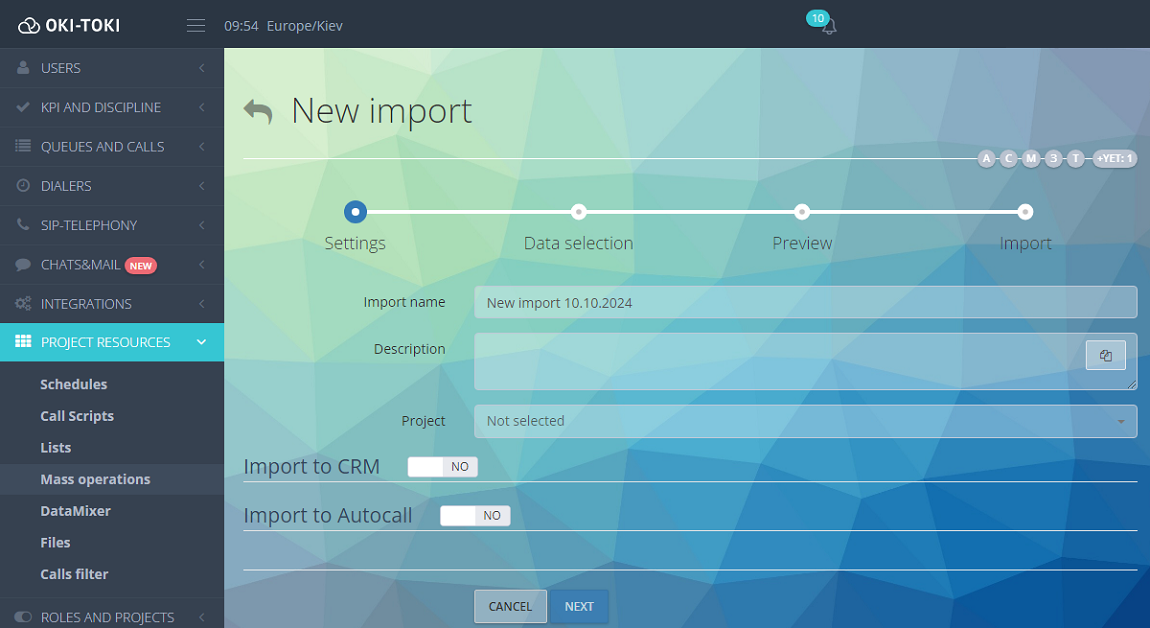
- Data Import — we overhauled all data import possibilities into CRM and Dialer, simplifying the process into a few easy steps — main import parameters, an interactive upload menu, and a preview of the results; we even released a video in honor of the update at this link;
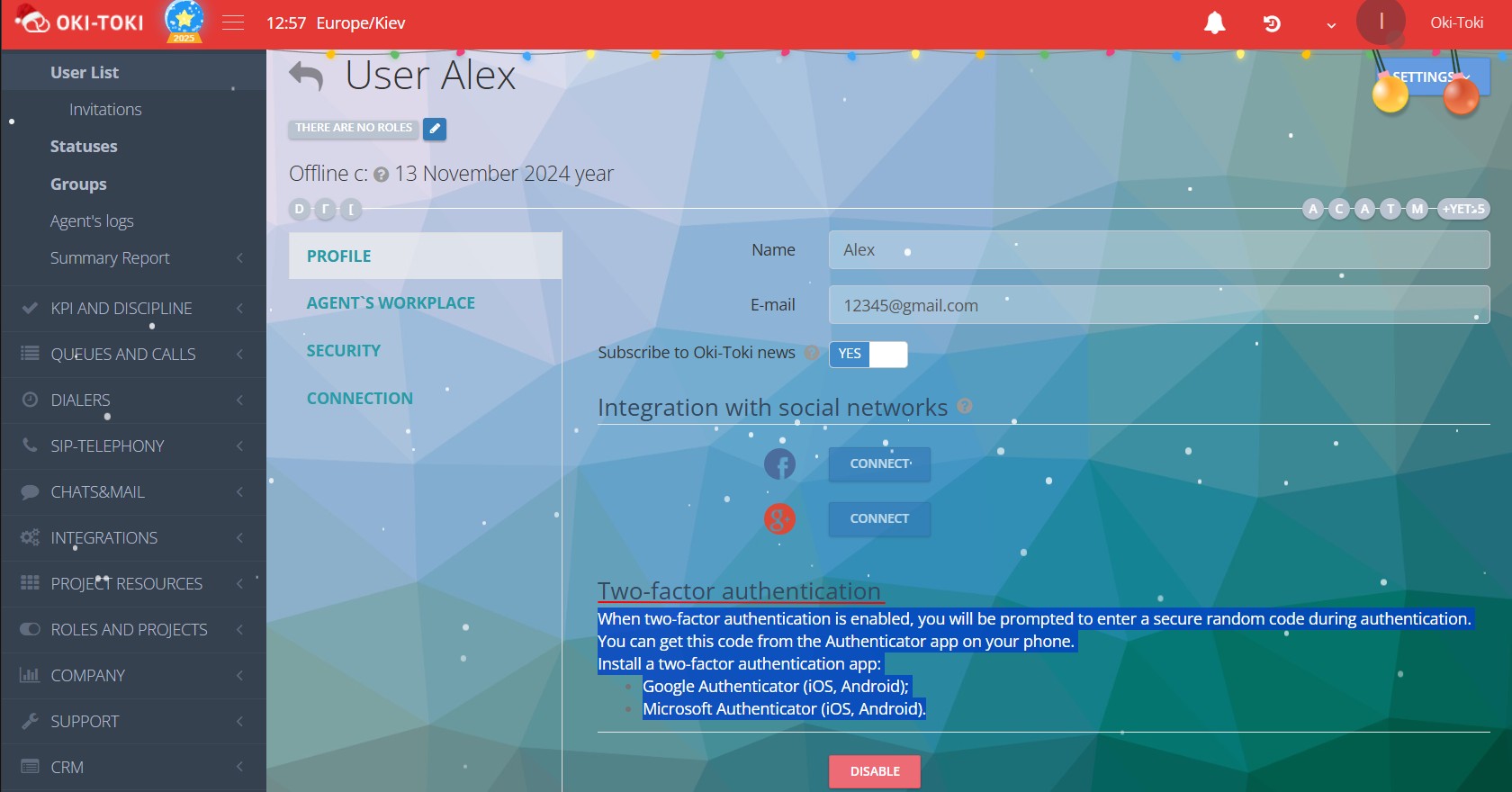
- Allowed IPs and Google Authentication – crucial security features for large (and not only) call centers. In Company settings, you can now specify which IP address users can use to log in to the service. Administrators with special permission can bypass this security restriction. Google Auth is classic two-factor authentication via a smartphone app. Each user can activate this option in their profile settings;
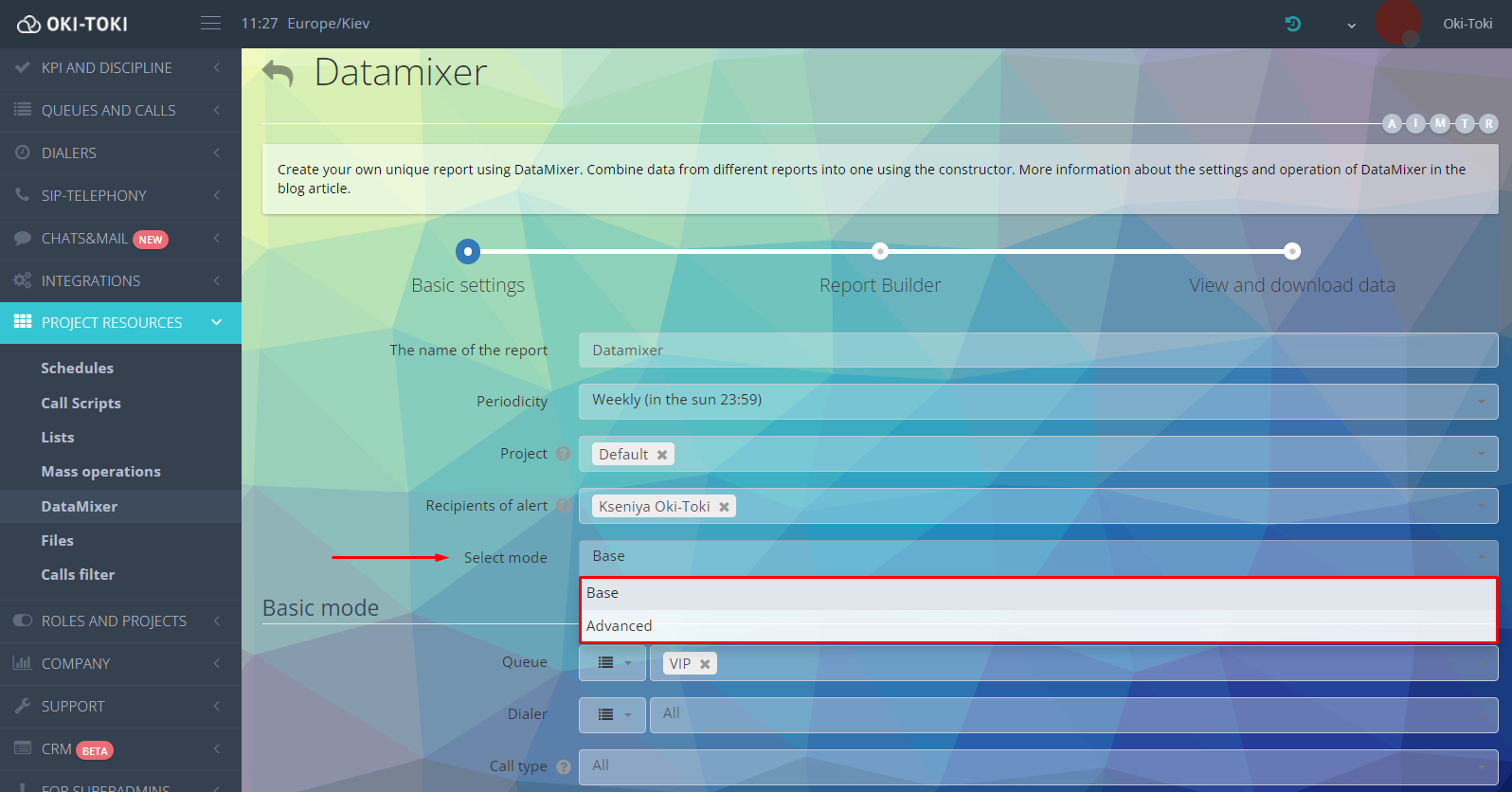
- The report builder DataMixer received a new creation and setup menu, similar to Data Import. Instead of complicated links, there are now familiar reporting filters. If your employee understands how to use Call Journal filters, they will be able to handle this builder too. A video about the update was also released on our channel;
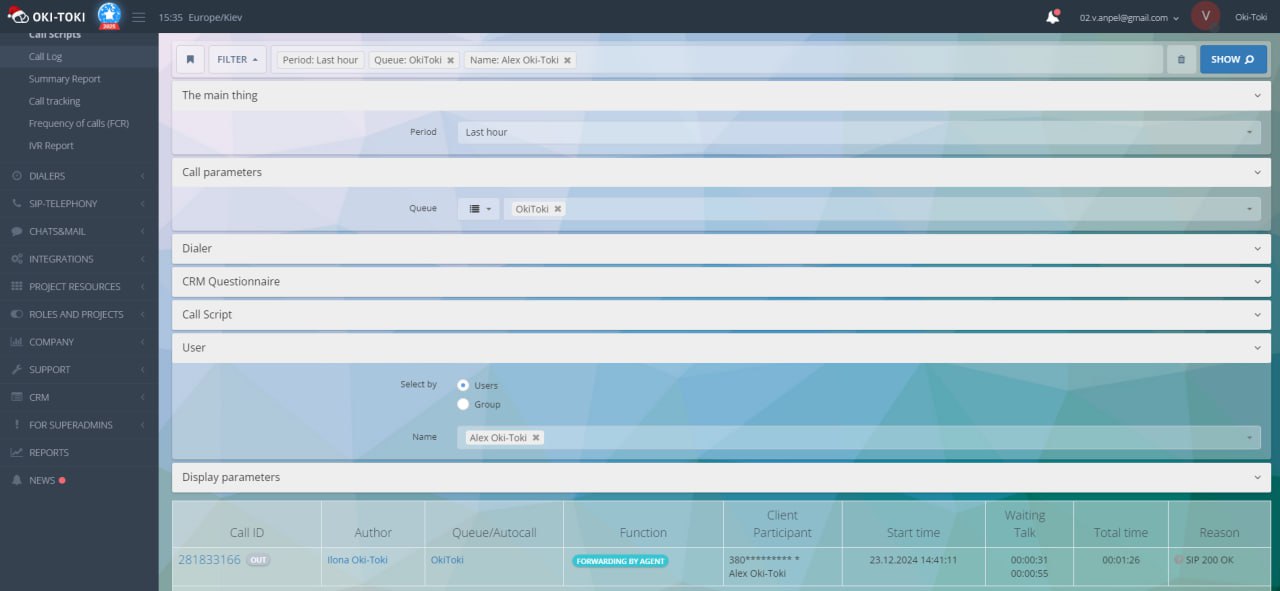
- The Call Journal saw the introduction of convenient filter management — right on the call page! The report displays the main filtering tools above it, and you can open the full list of filters with a button. Additionally, there’s quick management for templates and selected filters. Once most companies adapt to the new Call Journal management, we will disable the intermediary filtering page as unnecessary. By default, the report will display the last 100 records for quick access to recent calls. We will use this filter management approach in all updated Oki-Toki reports;
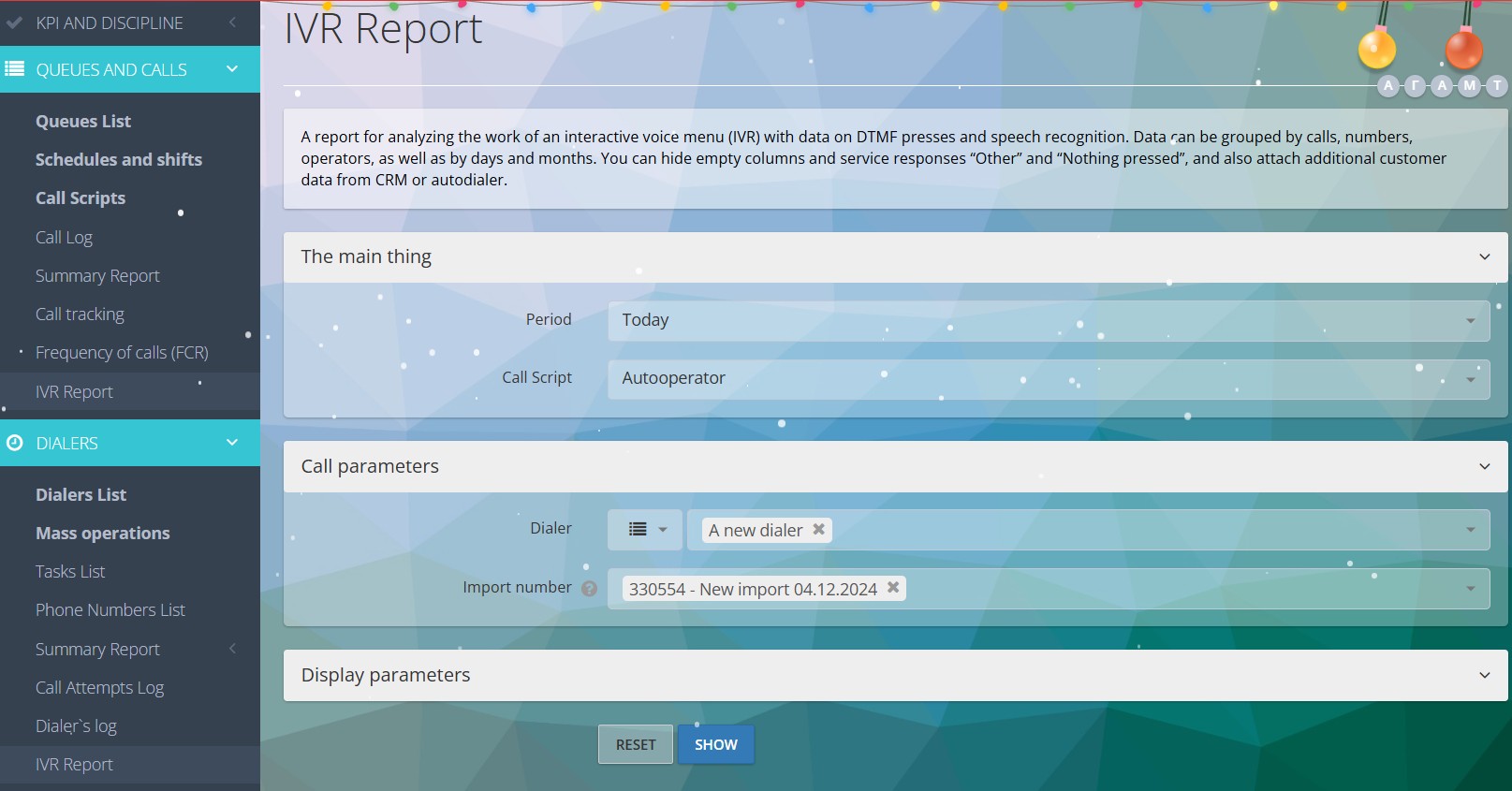
- This year, we launched a major project to overhaul all reports. Each report undergoes a review of queries and code, and refreshes the interface and data presentation to reduce the time required for their analysis. Currently, this includes all user reports, as well as the Call Attempt Journal, FCR Report, Call Journal, Call Summary, and the IVR report.
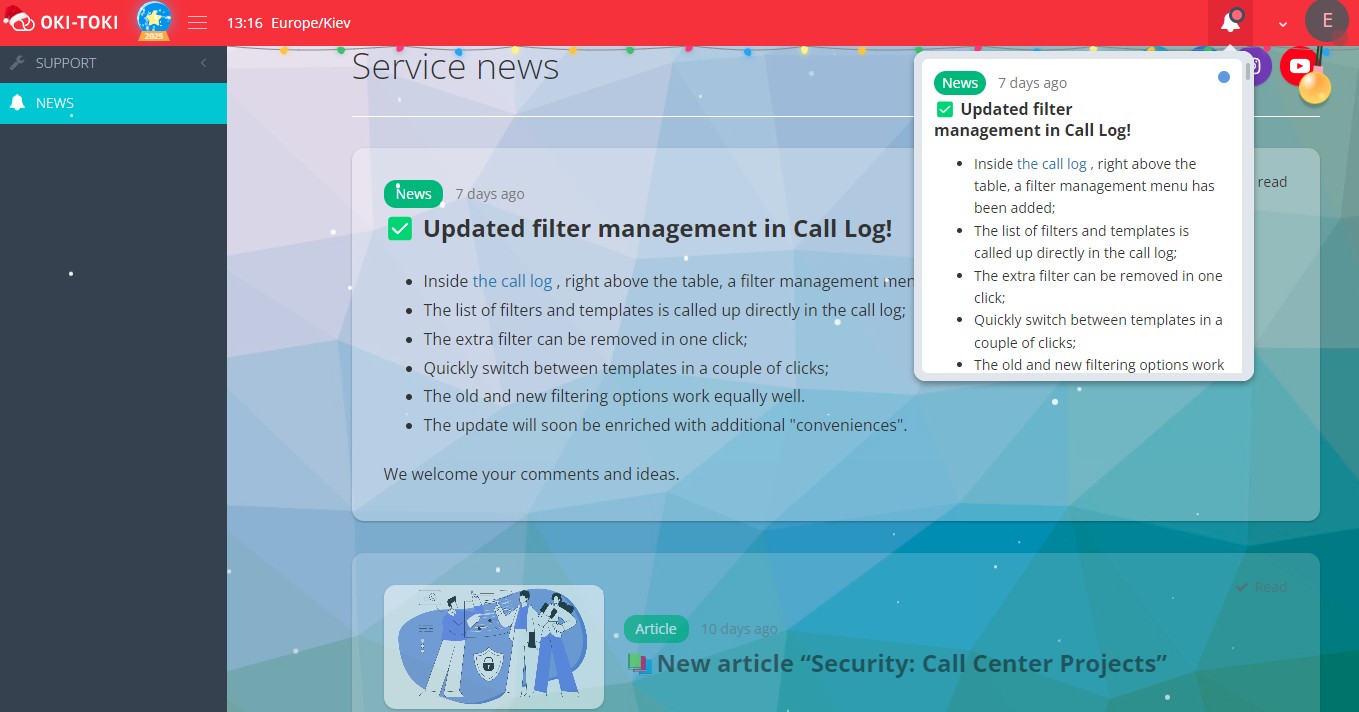
- “News” evolved into a separate section, rather than remaining a widget. We’ve given it a pleasing design, preview images for news items, added categories, and publication tags. This section also provides access to older publications.
Internal Work
This year began for Oki-Toki with a stress test. An unusually high load revealed flaws in our optimization. 4-5 years ago, such a load was not a problem for us, but time, changing environments, aging hardware, and approaches — all this resulted in a lot of downtime and malfunctions. And we rolled up our sleeves:
- Load Balancers (these are service components that distribute the load evenly across different servers, thus avoiding overloads) — we reviewed all the code and added hundreds of metrics for a deep understanding of the processes. We also shifted the balancers to new servers with current configurations and a huge capability reserve.
- Databases — all relevant tables were inspected. «containers». Then, we moved them into “containers”. It was a long and stressful process, but most importantly, the data is now even more secure, and the database itself restarts in case of a “crash”.
- The ATS Core (also known as Lira) cannot yet boast such in-depth work, but we’re just gaining momentum. While we untangle old “knots”, document all processes, and increase metrics for analytics. However, this year, we solved about a dozen very old ATS problems and have an understanding of how to address the remaining ones. Moreover, the work done will allow us to introduce an answering machine detector in the near future, but more on that later.
- Erlang (data server at the agent station) is one of the two servers to which agents connect. It is responsible for statuses and widget data, and we decided to abandon it, rewriting procedures to fit the modern possibilities of our ecosystem. With the complete abandonment of Erlang, we will implement connection recovery at the agent station, sparing agents from having to reload pages.
A Bit of Statistics About Our Team’s Work
- Blog. This year, we published 37 useful articles of our authorship, available in 6 languages;
- Support. Over the year, 4486 tickets were resolved. Support for programmers created and resolved 872 tasks concerning various fixes and improvements in the system. Support was strengthened by two new employees;
- In total, Development resolved 1268 tasks across all system areas. We are proud of the large number of tickets and tasks for fixes — it’s a sign that the service is very much alive and evolving.
Plans for 2025
We have formulated priority goals for the next year, some of which we did not manage to achieve this year for various reasons.
- Artificial Intelligence. Work is ongoing on an assistant within the Oki-Toki interface based on our accumulated experience and our blog. It will assist in setting up and analyzing data, as well as perform simple tasks for you;
- Answering Machine Detection. The updated ATS core supports this mechanism, but it will take time and effort to integrate recognition into our service conveniently and usefully;
- Developing CRM towards tasks and sales funnels. We have already prepared the technical specification and started development. We believe we will complete this plan item among the first;
- Resume work on chats. Many important and useful ideas have been formulated, but it’s too early to speak about them, stay tuned for announcements 🙂
- Merging agent stations and forms. We already have a ready prototype of an agent station that conveniently incorporates messenger chats, calls, widgets, and CRM forms. Code preparation for the new interface has been underway for several months;
- Deployment of a full-fledged Oki-Toki system locally in different countries.
There’s still a lot of work to be done, but we are full of energy and motivation to accomplish it. We wish you many profitable and stable projects, reliable employees and suppliers, and most importantly, peace in the skies and confidence in tomorrow.