

Almost every outsourcing call center manager eventually faces the same situation. There are enough agents, the projects are running, and the schedule has been prepared in advance. But at some point, problems start to appear: during some hours employees sit idle, during others the queue grows, SLA drops, and supervisors urgently look for someone to put on shift.
Then a natural question arises: maybe the problem is not the number of agents, but the work schedule?
Some call centers have been working for years on fixed shifts and have no intention of changing anything. Others are actively moving to flexible schedules and trying to match staffing to the real flow of requests. Each approach has its pros and its pitfalls, and we’ll discuss them in this article.
Why fixed shifts are still popular
If you look at most outsourcing projects, fixed schedules are the most common. The reason is simple: they’re easy to manage.
There is a shift from 9 to 6. There are employees assigned to the project. There is a clear schedule for the month ahead.
The manager knows in advance:
- how many agents will be on the line;
- who is working on a specific day;
- which hours are fully covered;
- how to calculate the workload.
For projects with predictable request volume, this is really convenient.
For example, if a call center serves an online store that only operates on weekdays, or a support line with a relatively stable number of calls, fixed shifts help maintain order without unnecessary complexity.
But there is one problem. Today, fewer and fewer projects operate in a stable mode.
When fixed shifts start to get in the way
At first, fixed shifts seem like the perfect solution. Everyone knows their schedule, it’s easier for the manager to plan work, and supervisors don’t spend time on constant reshuffling. But as projects grow, the schedule increasingly clashes with reality.
In the morning there are too many agents. In the evening, not enough. One project generates almost no calls, while another suddenly gets double the load after an ad launch. The dialer can change the situation in just one day.
This creates a strange situation: the staff is available, the workstations are ready, but resources are still insufficient.
Then the usual outsourcing routine begins: emergency reshuffling, requests to stay after a shift, searching for replacements, and constant attempts to cover the next traffic spike. And yet just yesterday the schedule seemed perfect.
Why more and more outsourcing teams are looking at flexible schedules
Not so long ago, fixed shifts were almost the only option. Projects were predictable, workloads didn’t change that much, and most agents were in one office.
Today the situation looks different.
It’s calm in the morning; then, after lunch, call volume suddenly increases. Tomorrow the client launches an ad campaign, and the number of requests doubles. In a week, a new project or dialer starts, requiring extra resources for just a few days.
In such conditions, it becomes difficult to live by a schedule drawn up a month ago.
That is why many outsourcing centers are beginning to add more flexibility to shift planning. Not because it’s a trendy move, nor because employees demand it, but simply because the workload has become less predictable.
When some agents can join during peak hours, take short shifts, or cover specific tasks, it becomes easier for the manager to handle resources. Instead of urgently looking for new employees, you can redistribute the existing team.
Remote work has also played a separate role. Today, not every agent is ready to work solely by the classic morning-to-evening scheme. Some people prefer to work in the second half of the day, some combine work with studying, and some prefer several short shifts a week instead of a standard five-day schedule.
For a call center, this means a wider choice of candidates and more opportunities to cover hours without constant hiring.
Where flexible scheduling fails
At first glance, it may seem that a flexible schedule can solve all workload problems. In practice, things are a bit more complicated.
If you don’t plan the workload, flexibility quickly turns into chaos. The most common mistake is allowing employees to choose shifts independently without considering project needs.
As a result, agents choose the most convenient hours, while high-load periods are left uncovered. The manager once again returns to manual control, but now with even more tasks.
Flexible scheduling only works when there is an understanding of the real workload and tools to control it.
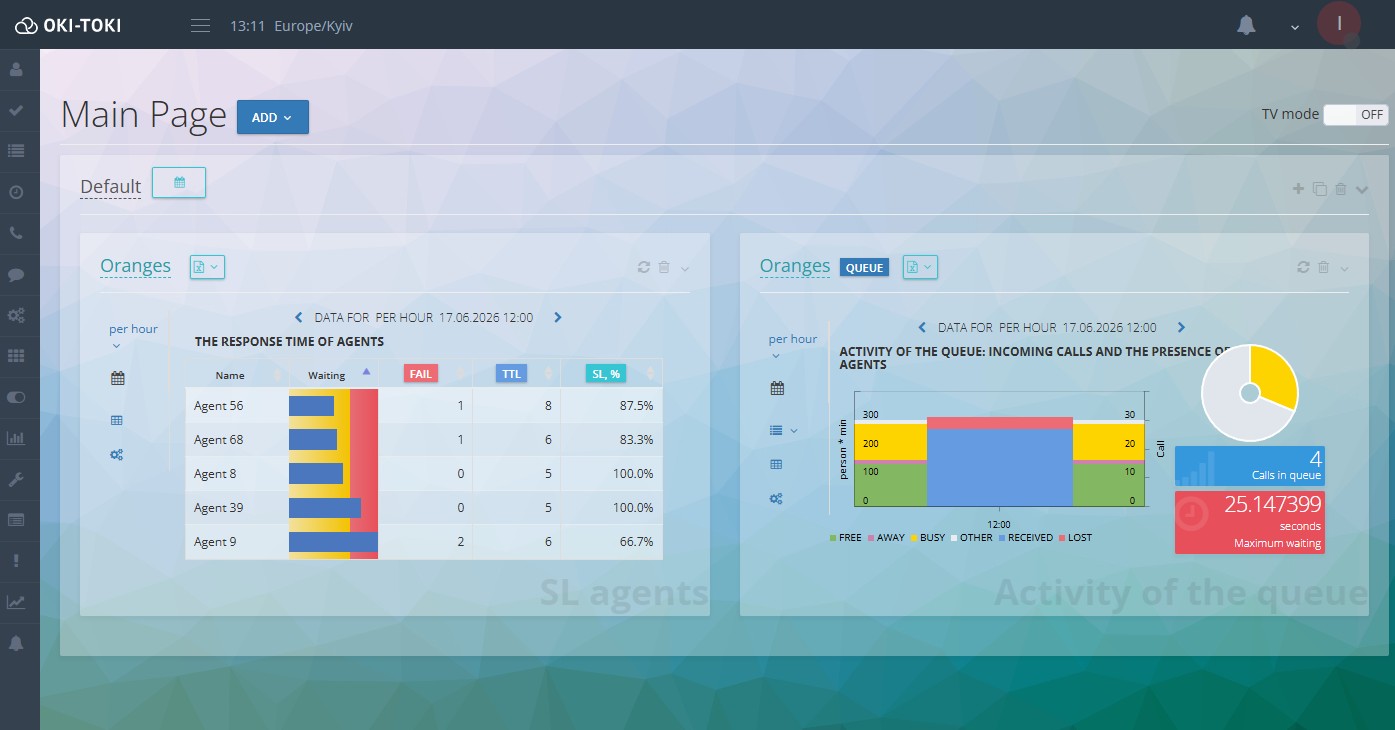
In the end, the winning call center is not the one with the freest or the strictest schedule. The winner is the one that understands its workload. When you can see call distribution by hour, queue activity, agent occupancy, and SLA metrics, it becomes easier to make decisions and strengthen shifts where they are really needed.
What works in practice
If you look at call centers that have long been working with several clients at the same time, you can notice one interesting pattern.
Most of them have long stopped choosing between fixed and flexible schedules. Instead, they combine both approaches.
A portion
of the team ensures stable project coverage and works according to a clear schedule. The rest join when truly needed: during periods of high load, when launching new campaigns, or during seasonal spikes in requests.
This approach helps avoid extremes. You don’t have to keep an excessive headcount “just in case,” and the risks of being left without agents at a crucial moment become much lower.
In essence, the call center gets an extra safety cushion. And for outsourcing, that often turns out to be much more important than arguing about which schedule is inherently better.
How Oki-Toki helps
When it comes to schedules, the problem usually isn’t the shifts themselves. The problem is that the manager does not always understand where there is a real shortage of people, who is overloaded, and who is idle.
That is why you should start not with reshuffling shifts, but with the data.
In Oki-Toki, you can track agent workload, request distribution by hour, queue activity, and performance for each project. When you can see the real workload picture, decisions become much easier.
For example, the “Metrics” widget helps you track team KPI in real time. The system will immediately show if an employee was late for a shift, left early, or missed a day of work. And if you need to respond quickly to such situations, you can set up notifications or API integrations — information about schedule violations will be sent automatically to the responsible staff.
For managers, real-time agent monitoring is especially useful. You can see how many employees are currently on the line, whether there are enough resources to handle requests, whether there are missed calls, and whether KPIs are being violated.
But seeing the situation is only half the task. It is also important to plan resources correctly. That is why many outsourcing centers use WFM (Workforce Management) — an approach to workload and shift planning based on real data. When you know how many requests come in at different hours and on different days, it becomes easier to build a schedule without idle time or overload.
Shift planning also helps with workload management. The manager can distribute the load in advance based on the predicted number of requests, and the system will monitor working hours and schedule compliance.
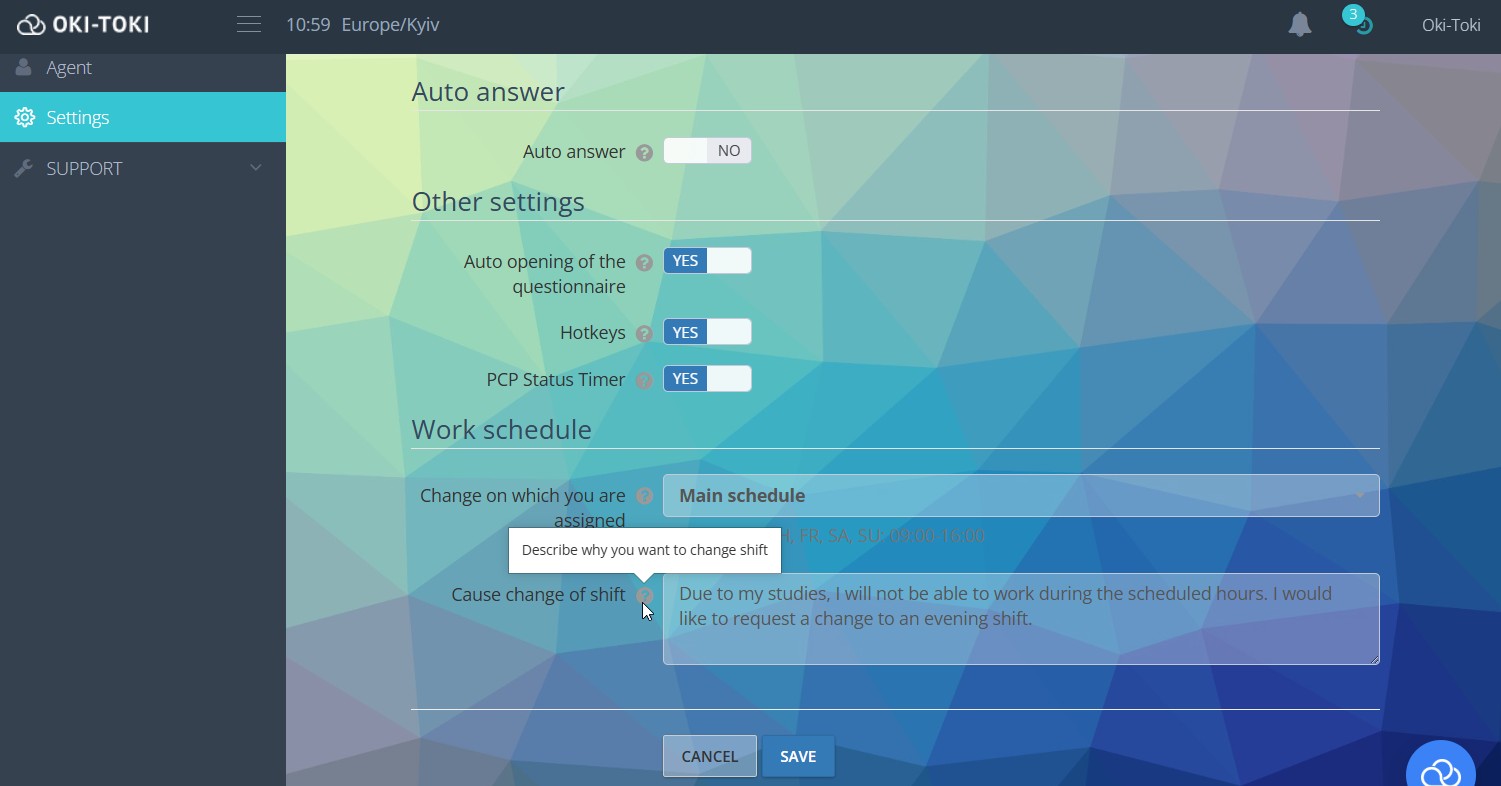
*If an agent in Oki-Toki needs to change a shift, they don’t have to look for a supervisor in chats or write emails. The request can be sent directly from the workstation, and the supervisor will see it and make a decision.
It is also worth highlighting KPIs. They help not only with discipline but also with understanding whether there are enough people on the project. Sometimes it seems that you urgently need to hire new agents, but in practice it turns out that the problem is the schedule or workload distribution.
For motivation, you can use bonuses and penalties, which are tied to KPIs and other metrics. The system will automatically calculate the results according to the rules you set.
And to avoid collecting data from different reports, Oki-Toki has automatic reports. They generate a summary of working hours, agent occupancy, late arrivals, early departures, and other important metrics and send it by email.
The benefit of such tools is especially noticeable in omnichannel teams, where employees work not only with calls but also with chats, email and messengers.
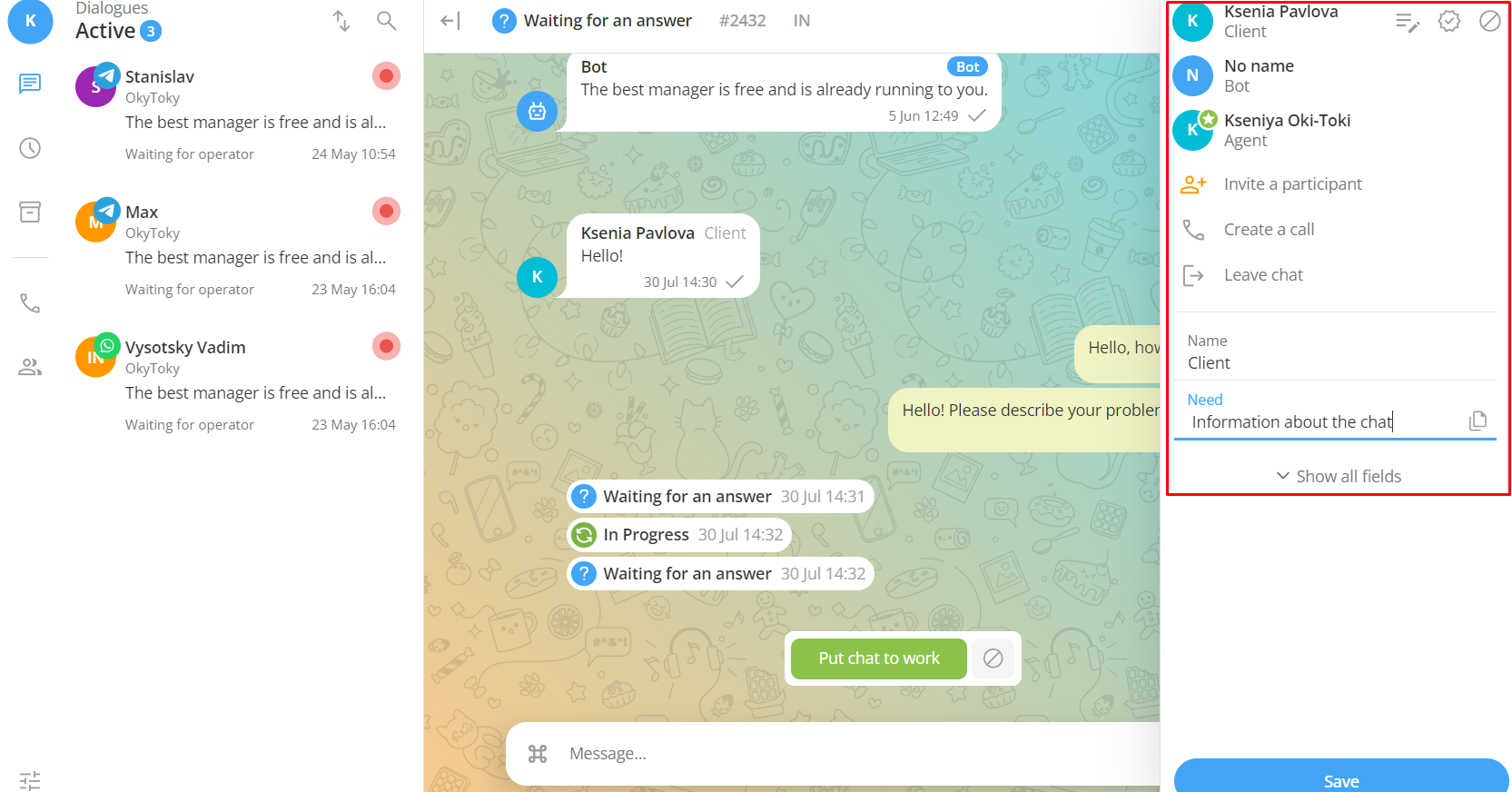
If requests in one channel decrease, the manager sees it immediately and can redistribute agents to other tasks without unnecessary fuss or manual calculations.
What is more profitable ultimately
If a project operates in a stable mode and the workload is easy to predict, fixed shifts remain a simple and clear option.
If a call center serves several clients, runs a dialer, works with chats, and regularly faces changing workloads, it becomes increasingly difficult without elements of flexible scheduling.
So today, the question is usually not “fixed or flexible schedule.”
What matters much more is how well the schedule matches the real workload.
When the schedule is built on data rather than assumptions, everyone wins: agents get more comfortable working conditions, managers face fewer planning problems, and clients get stable service regardless of season and request volume.
That is why many outsourcing call centers are gradually moving away from rigid schemes and switching to more flexible management. Not because it is trendy, but because modern workload requires exactly this approach.